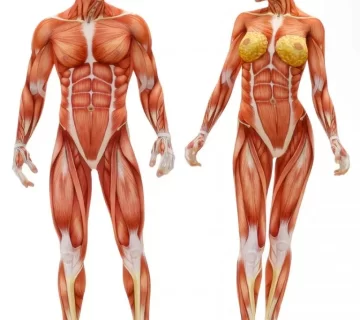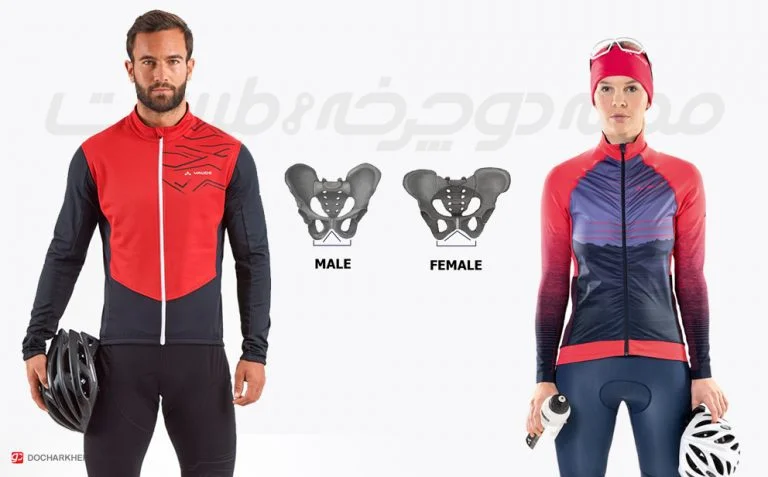
Due to the physical differences in the bodies of women and men, their bicycles have differences. Women often have shorter upper body and arms, longer legs, as well as less shoulder width and larger hips than men. A series of these things have caused the differences between women’s and men’s bicycles, which we will discuss in this note.
Differences between women’s and men’s bikes among brands
First of all, you should know that all the differences between women’s and men’s bikes are not observed in all bike brands. Perhaps only the first item mentioned below is observed in all women’s bicycles, and the rest of the differences are observed only in high-end bicycles or bicycles from well-known global brands. The difference between women’s and men’s bicycles in the lower categories with prices below 1000 euros is not observed, and the only difference between them is the size and color of the bicycle body.
Is there a requirement for women to use women’s bicycles?
No, it is not required. We all have friends who have shorter legs and longer torsos or vice versa, and we can say that none of them are physically the same. Also, many women are stronger than men, and men are smaller than most women. Therefore, it is not necessary that women must use women’s bicycles and men should not use women’s bicycles. Continue with us to understand the difference between women’s and men’s bicycles.
Body size is the most important difference between women’s and men’s bikes
The most important difference between women’s and men’s bicycles is the size of the bicycle body, which is observed to some extent in all bicycles in the market from cheap to expensive. As explained above, women have a shorter upper body, and therefore the distance between the saddle bar and the front of the bicycle (TOP TUBE LENGTH bar) on which the handlebar is mounted is shorter, and also classically, the upper bar of the bicycle body has a negative slope for comfort. Women who wear skirts are riding, and this case is more symbolic considering that many women do not use skirts today, although women use skirts a lot in the style of city bikes, and this negative slope of the upper body bar is very efficient.
Women’s bikes are usually made up to size xs, while men’s bikes are usually no smaller than size s. Also, in many brands, men’s and women’s bikes are offered in the same product, and there is no difference between men’s and women’s bikes.
Short handlebar width in women’s bikes
Women have a smaller shoulder width than men, so the handlebar width of women’s bikes is smaller than that of men’s bikes. This issue is less visible in mountain bikes that have straight and long handlebars, but it will be more tangible in road bikes where the bike handlebars are shoulder-width apart.
Brake lever difference
Women have more delicate hands and the brake levers should have a smaller distance from the steering wheel. Some brake levers are adjustable and their distance with the steering wheel is reduced, and some models are produced for women.
The main differences between women’s and men’s saddles
Women have larger hips than men. The end of the pelvis that is placed on the saddle is 9 to 17 cm in women and this distance is between 6 and 16 cm in men. Also, the shape of the pelvis of men and women has other fundamental differences, which you can read in full in the “Education of the right saddle for men and women”. For this reason, the women’s bike saddle is different from the men’s.
The difference in arm length according to stature
The arms according to the stature are produced in different sizes such as 170, 172.5, 175 and also other sizes and they change according to the height of the cyclist. For example, in 16-inch or S size bikes, a frame with a 170 arm is used, and in a size 18 or L bike, a frame with an arm size of 175 is used. Shorter is used. Also, smaller trays (front gear wheel) are usually used in the Qamas, which can be pedaled with less foot pressure. This applies to both youth and women’s bikes.
The distance from the axle to the axle of the pedals
As explained above, women have larger hips than men, and this causes the distance between women’s legs to be greater than men’s, as well as the location of the soles of the feet on the ground or on the bicycle pedals. For this reason, the distance between the two axles of the pedals is greater in women’s bicycles. Of course, all the cases except for the first case explained in this note are observed less in women’s model bicycles and are considered more in high-end bicycles from reputable brands. And this case of the distance between the two axles of the pedals is much less seen in different brands, and usually this case is done after buying a bike by a bike fitter, a person or a group that performs the bike fitting process or customizing the sizes. Of course, until this moment when this note was written, none of the bike fitting centers in Iran offer this setting.
Conclusion
As explained in the upper parts of the note, in most women’s bicycles, the type of bicycle body and its color are different from men’s two-wheeled models, and the rest of the cases are observed in high-end bicycles or reputable brands. It should also be kept in mind that all of these items, except for the bike body, can be changed after buying the bike and you can customize them, but it may not be economical due to the high cost of the accessories.