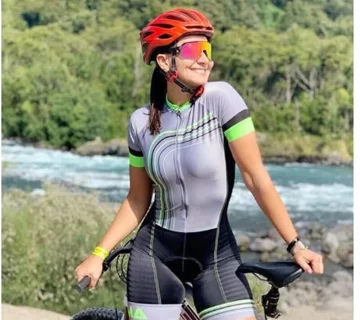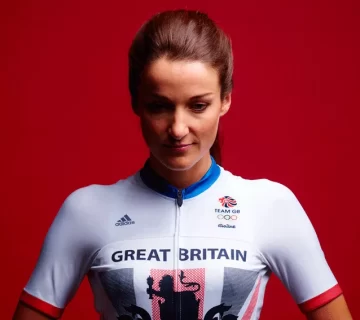
“I feel like a rookie today,” Erica says as she gets out of the saddle to climb a small hill in Claremont, Florida. “There’s nothing like feeling bloated and lethargic on the day of a shoot,” he continues after the photographer in the car ahead takes his next shot.
It may be said that this issue is more ironic. At a time when many advertisements of women’s hygiene products are always seen during various competitions, but some distinguished female athletes, such as Paula Radcliffe, who holds the marathon world record, criticized the sports world for not understanding how to deal with it properly. With women’s menstruation, they get criticized. In an interview with BBC, he said: “I believe this issue is related to the lack of education. In the world of sports, mostly male doctors are used, who do not understand this situation.
We must admit that this is a fair criticism. First of all, men basically do not know what this period is like, and even many female trainers do not understand the physiology and function of menstruation. In fact, no one has ever taught them such a thing; Probably because no one knew. This is a field of medicine that has not been studied enough. Even today, women who ride in professional teams, only cope with this situation.
Considering the possible consequences, this is a reasonable doubt. When doctors and trainers intervene, their lack of awareness can worsen the situation. It is for this reason that Radcliffe requests more studies on the effect of menstruation on the performance of female athletes. In particular, he points to the World Championships in 2013, when British team doctors gave Jessica Judd, the country’s runner, artificial progesterone to delay her period. Judd failed, and Radcliffe, who himself had taken artificial estrogen in the past and knew it would make things a hundred times worse, was not surprised by his failure.
In fact, Radcliffe broke the marathon record at the 2002 Chicago Games while suffering from menstrual cramps. He wants everyone to know this because it is a surprise to everyone. Of course, almost a small number of scientists are studying the effects of menstruation on a person’s performance. One of these scientists is Professor Stacy Sims from Stanford University, who is considered the founder of OSMO nutrition. Sims has been making waves over the past few years with his “Women Are Not Little Men” speeches. These lectures specifically address how female hormones affect thermoregulation, macronutrient utilization (whether we burn more carbohydrates and fat during exercise), hydration, performance, and recovery.
“All women worry about having a period problem at a big race,” says Sims. But in fact, it is only the period before the onset of menstruation that is a problem, and the reality is that as soon as the monthly habit begins, your hormones will be completely in favor of your performance.
A men’s field for British women cyclists
[quote] All women are worried about having menstrual problems during a big competition. But in fact, it is only the period before the onset of menstruation that is problematic, and the reality is that as soon as the period begins, your hormones will be completely in favor of your performance. [/quote]
To simplify the matter, you should know that women go through two hormonal phases every month: up and down. During the low hormonal phase, their physiology is similar to men in terms of carbohydrate metabolism and recovery. However, when the hormones increase in the second half of the month, the matter takes a different form. High estrogen levels start a series of biological reactions that work against you when you need to perform at your best. For starters, extra estrogen causes your body to store glycogen and increase your fat-burning metabolism. This process sounds good, but it’s not very useful when you’re racing or doing threshold distances and need carbs for quick, intense fueling. At the same time, high levels of progesterone raise the body’s core temperature, delaying the sweating response, increasing the rate of sodium loss, and making it more difficult to stay cool during intense activity. High levels of progesterone also make amino acids more difficult to access, so you’ll experience more muscle damage during hard workouts. In addition, estrogen and progesterone cause the transfer of fluids to the cells, the unpleasant feeling of bloating, the increase of the blood plasma volume up to eight percent, and the fatigue of the central nervous system. The end result is that exercise seems much harder during this time than the rest of the month.
The big shock of German sports
When you have been training hard for months, this situation can be very frustrating. Despite these cases, fortunately, even with premenstrual syndrome (PMS), women still manage to achieve the best athletic records. They have managed to set records, win competitions and games, and win medals at every stage of their menstrual cycle, regardless of how uncomfortable they feel.
But what if you don’t want to bear this unpleasant feeling? What if you could manage how hormones affect your exercise? Sims, who also works with top professional cyclists on the US Olympic cycling teams, believes that “you can.” “It requires working with your own physiology to give your body what it needs when it needs it,” he says. The following three points will help you get through PMS with strength.
Keep your carbohydrate reserves high
Due to the fact that you cannot easily access your carbohydrate reserves, you should provide your body with more carbohydrates during premenstrual period. Take 50 grams of carbohydrates one to two hours before each exercise for more than ninety minutes and another 45 to 55 grams of carbohydrates for each hour you continue to exercise.
Strengthen your amino acids
In this part of the menstrual cycle, muscle damage is faster and their recovery is more difficult. A snack or recovery drink is of particular importance to ward off muscle damage and increase muscle synthesis. According to Sims, especially whey protein or cheese juice, which is rich in the muscle-building amino acid leucine, will be very suitable during this period. He adds: “You need 20 to 25 grams of protein in thirty minutes for effective recovery.” Greek yogurt is an easy and delicious protein composition, each cup of which contains 20 grams of protein.
Beryl Burton, the woman who broke the men’s record
Prepare for PMS
Your plasma volume is low, so the risk of heat stress increases. To compensate for the transfer of core temperature and decrease in body fluid volume, hydration is of vital importance, especially if you are cycling and competing in hot weather. Drink 350 to 500 milliliters of cold sodium-containing beverages (aim for 1,000 to 1,500 milligrams of sodium in the sodium intake process) to get fluids into your bloodstream when you need them. Then drink a large bottle of hydration fluid for every one hour of cycling.